AI governance today is a policy problem solved with documents. It should be an engineering problem solved with architecture.
The engineering discipline of making autonomous AI systems accountable, verifiable, and bounded while they run in production.
Understand the gap →AI governance has a category error at its foundation. Organizations treat governance as a policy problem — something solved by documents, checklists, and approval workflows. It is not. It is an engineering problem. The question is not whether an organization has a governance policy. The question is whether its architecture makes that policy enforceable at runtime.
Read the argument →"An agent that can take irreversible actions without runtime constraints is not a governed system. It is an ungoverned system with a policy document attached."
Capability defines what a model can do. Verification decides what it gets to do — output by output.
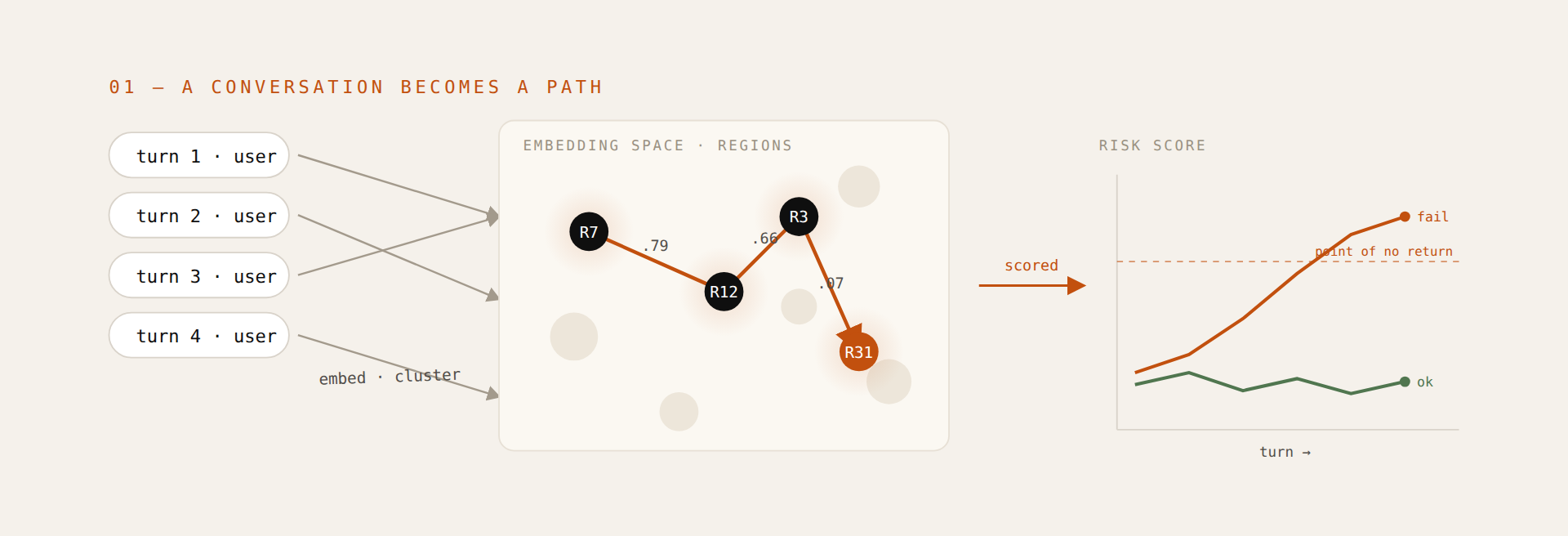
Safety is a property of sequences, not individual actions. A trajectory of individually-authorized steps can still compose into an unauthorized outcome — catching this requires evaluating the path, not just the steps.
ACTIVE RESEARCHNo agent is authorized to act by default. Every action requires evidence that justifies it — specific to the request, valid for one use.
Accountability means knowing who authorized what. Full authority chains record every decision — from directly instructed to fully autonomous.